We will learn how to automate springboot microservices builds using Jenkins pipeline and Deploy into AWS EKS Cluster with help of Kubernetes CLI plug-in.
We will use Springboot Microservices based Java application. I have already created a repo with source code + Dockerfile. The repo also have Jenkinsfile for automating the following:
- Automating builds using Jenkins
- Automating Docker image creation
- Automating Docker image upload into AWS ECR
- Automating Docker Containers Deployments to Kubernetes Cluster
- Automating Docker image creation
- Automating Docker image upload into AWS ECR
- Automating Docker Containers Deployments to Kubernetes Cluster

Watch steps in YouTube channel:
Same Code for this video is here:
Make sure you fork my repo https://github.com/akannan1087/springboot-app
Pre-requisites:
1. Amazon EKS Cluster is setup and running. Click here to learn how to create Amazon EKS cluster.
1. Amazon EKS Cluster is setup and running. Click here to learn how to create Amazon EKS cluster.
5. Docker, Docker pipeline and Kubernetes CLI plug-ins are installed in Jenkins


Step # 1 - Create Maven3 variable under Global tool configuration in Jenkins
Make sure you create Maven3 variable under Global tool configuration.

Step #2 - Create Credentials for connecting to Kubernetes Cluster using kubeconfig
Click on Add Credentials, use Kubernetes configuration from drop down.

use secret file from drop down.

execute the below command to login as jenkins user.
sudo su - jenkins
you should see the nodes running in EKS cluster.
kubectl get nodes

cat /var/lib/jenkins/.kube/config

Open your text editor or notepad, copy and paste the entire content and save in a file.
We will upload this file.

Enter ID as K8S and choose File and upload the file and save.

Enter ID as K8S and choose enter directly and paste the above file content and save.
Step # 3 - Create a pipeline in Jenkins
Create a new pipeline job.


Step # 4 - Copy the pipeline code from below
Make sure you change red highlighted values below as per your settings:
Your docker user id should be updated.
your registry credentials ID from Jenkins from step # 1 should be copied
Make sure you change red highlighted values below as per your settings:
Your docker user id should be updated.
your registry credentials ID from Jenkins from step # 1 should be copied
pipeline {
tools {
maven 'Maven3'
}
agent any
environment {
registry = "account_id.dkr.ecr.us-east-1.amazonaws.com/my-docker-repo"
}
stages {
stage('Cloning Git') {
steps {
checkout([$class: 'GitSCM', branches: [[name: '*/main']], doGenerateSubmoduleConfigurations: false, extensions: [], submoduleCfg: [], userRemoteConfigs: [[credentialsId: '', url: 'https://github.com/akannan1087/springboot-app']]])
}
}
stage ('Build') {
steps {
sh 'mvn clean install'
}
}
// Building Docker images
stage('Building image') {
steps{
script {
dockerImage = docker.build registry
}
}
}
// Uploading Docker images into AWS ECR
stage('Pushing to ECR') {
steps{
script {
sh 'aws ecr get-login-password --region us-east-1 | docker login --username AWS --password-stdin account_id.dkr.ecr.us-east-1.amazonaws.com'
sh 'docker push account_id.dkr.ecr.us-east-1.amazonaws.com/my-docker-repo:latest'
}
}
}
stage('K8S Deploy') {
steps{
script {
withKubeConfig([credentialsId: 'K8S', serverUrl: '']) {
sh ('kubectl apply -f eks-deploy-k8s.yaml')
}
}
}
}
}
}
Step # 5 - Build the pipeline
Once you create the pipeline and changes values per your configuration, click on Build now: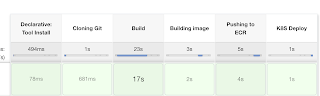
Step # 6 - Verify deployments to K8S
kubectl get pods

kubectl get deployments

kubectl get services

If you see any errors after deploying the pods, you can check the pod logs.

kubectl logs <pod_name>
Steps # 7 - Access SpringBoot App in K8S cluster
Once build is successful, go to browser and enter master or worker node public ip address along with port number mentioned above
http://loadbalancer_ip_address
You should see page like below:

Note:
Make sure you fork my repo https://github.com/akannan1087/springboot-app
and make changes in eks-deploy-k8s.yaml to pull Docker image from your AWS ECR repo.


in jenkins pipeline during docker image build stage, how it is getting build? is it referring docker file from github and also in pipeline its just mentioned "docker.build registry" - what exactly it will do, can we use "docker build -t registry ." command instead
ReplyDeleteAutomating the deployment of Spring Boot microservices to Amazon EKS demonstrates how CI/CD pipelines can streamline the process of building, containerizing, and deploying Java applications. By combining Jenkins, Docker, Amazon Elastic Container Registry (ECR), and Kubernetes, developers can automate application builds, publish container images, and deploy workloads to an EKS cluster. This workflow also highlights the importance of consistent deployment practices and effective coordination between application code and cloud infrastructure.
ReplyDeleteFor learners interested in developing Java-based web applications, the Spring Boot ReactJS Full Stack Developer Course provides a pathway to explore backend services with Spring Boot and frontend development with ReactJS. Understanding how these components interact can help developers prepare applications for containerization and automated deployment through modern DevOps workflows.
Another option is the Spring Boot NextJS Full Stack Developer Course, which combines Spring Boot backend development with Next.js frontend technologies. Once the application architecture is in place, tools such as Jenkins, Docker, and Kubernetes can help automate delivery and deployment, making it easier to manage application updates across cloud environments.
ReplyDelete